
What Box Breathing Is
Box breathing, also called square breathing, is a breathing technique built around a simple shape: a square with four equal sides. Each side is one phase of the breath, and each phase lasts the same count — usually four seconds. Breathe in for four, hold gently for four, breathe out for four, hold again for four, and repeat.

The technique is widely used in anxiety self-help material, including NHS guidance, and in high-pressure professions where steady breathing under stress matters. Its appeal is practical rather than mystical. When anxiety makes the mind race, an open-ended instruction like "just breathe" can feel too vague to hold onto. A square gives attention a clear structure: four phases, equal counts, a shape you can picture in your mind as you breathe. Counting and visualising together occupy the part of the mind that would otherwise be rehearsing worries, while the slow, even rhythm gives the breath a chance to settle.
Box breathing is not a cure for anxiety, and it is not a substitute for professional support when anxiety is persistent. It is a momentary tool — one you can use before a difficult conversation, during a stressful day, or as part of a daily practice — and like any tool, it works best when you have practised it before you need it under pressure.
The 4-4-4-4 Pattern, Step by Step
Step 1: Sit Comfortably and Breathe Out
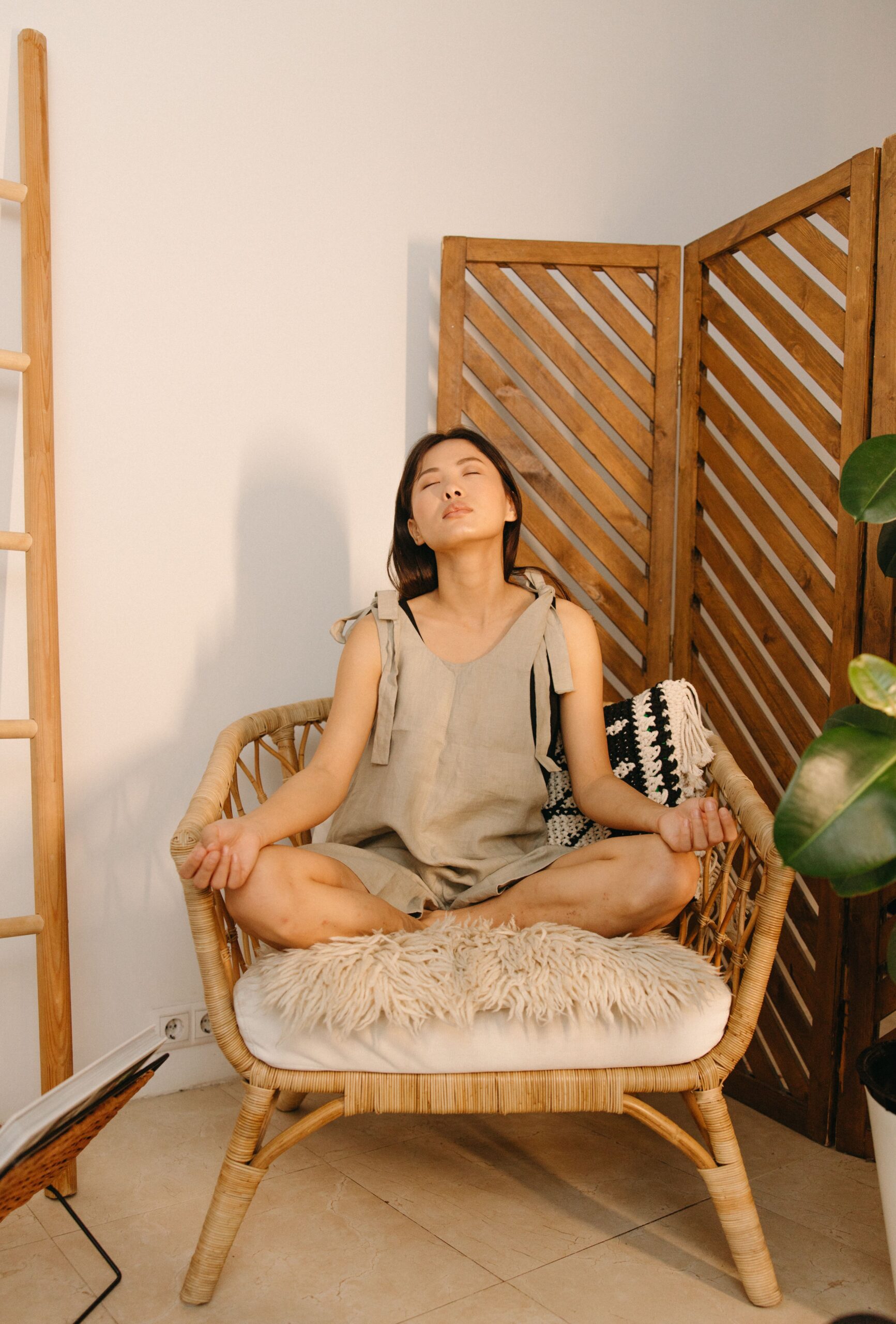
Sit in a chair with your feet on the floor, or stand with your feet planted. Drop your shoulders, soften your jaw, and let your hands rest in your lap or by your sides. Close your eyes if that feels comfortable, or rest your gaze softly on the floor.
Before you begin, breathe out gently through your mouth, emptying your lungs without forcing them. This gives you a clean starting point, so the first in-breath does not feel like it is stacking on top of air already in your lungs.
Step 2: Breathe In for Four
Breathe in slowly and gently through your nose, for a count of four. Count at a comfortable, unhurried pace — roughly one second per count, but do not watch the clock. Let the breath come from low in the body if you can, feeling your belly rise slightly, rather than forcing air into your upper chest. Keep the breath small and quiet. You are not trying to fill your lungs to capacity. A gentle, partial breath, taken slowly, is exactly right. Picture the first side of the square as you breathe in: a line travelling upwards.
Step 3: Hold Gently for Four
Hold for a count of four — a soft pause, not a tense, clenched hold. Do not clamp your nose or mouth shut, tighten your jaw, or brace your shoulders. Think of it as the breath resting, rather than being trapped. This hold is the part some people find hardest. If it feels uncomfortable, shorten it — the section on shorter counts below explains how. A gentle two-second hold, done calmly, is worth far more than a strained four-second hold that leaves you gasping. Picture the second side of the square: a line travelling across the top.
Step 4: Breathe Out for Four
Breathe out slowly through your mouth for a count of four, as if cooling a hot drink or making a candle flame flicker without blowing it out. Let the breath leave gradually, not in a rush. Feel your belly fall gently, your shoulders drop a fraction, your jaw soften further. Picture the third side of the square: a line travelling downwards.
Step 5: Hold Empty for Four
Hold again, with empty lungs, for a count of four. This second hold often feels stranger than the first, because the natural urge is to breathe in immediately. Keep it gentle. You are pausing, not depriving yourself of air. If four feels too long, shorten it, or skip this hold entirely at first and go straight to the next in-breath. Picture the fourth side of the square: a line travelling back across the bottom, closing the shape.
Step 6: Repeat for Four or Five Rounds
That is one round. Repeat for four or five rounds to begin with — roughly two to three minutes of practice. Then breathe normally for a few breaths and notice how you feel: shoulders lower, breathing slower, mind a little quieter, or much the same. Any of those is a fine outcome. If you feel dizzy, light-headed, or more anxious, stop, breathe normally, and try shorter counts another time.
Visualising the Square
The name comes from the visualisation, and using it properly makes the technique easier to remember under stress. Imagine a square in front of you. As you breathe in, trace up the left side. As you hold, trace across the top. As you breathe out, trace down the right side. As you hold empty, trace back across the bottom. Then begin again at the bottom-left corner.
Shorter Counts for Beginners
Four seconds per phase is the standard pattern, but it is not a rule, and it is not the right starting point for everyone. If four feels long, strained, or anxiety-provoking, shorten the count. The square shape matters more than the number: four equal phases, steady rhythm, no rushing.
Start with two. Breathe in for two, hold for two, breathe out for two, hold for two. This is a genuinely useful practice, not a watered-down one. Many people find that two-second phases feel natural immediately, and that is a better foundation than a strained four.
Move to three. When two feels easy, try three seconds per phase for a few rounds. Notice whether the holds still feel gentle. If they start to feel strained, stay at two for longer. There is no deadline for reaching four.
Reach four when it feels easy. Four seconds per phase, done gently, is the pattern most guides describe. If you reach it comfortably, stay there. If four never feels comfortable, stay at three. A comfortable three-second square, practised daily, beats an uncomfortable four-second square abandoned after a week.
Skip a hold if you need to. If breath holds make you feel panicky — a common reaction, because holding the breath can feel like air hunger — shorten the holds first, and if they still feel wrong, drop them entirely. Breathe in for four and out for four, with no pauses, keeping the slow, even rhythm. The slow pace is what matters most.
When to Use Box Breathing
Before something stressful. Box breathing suits the minutes before a known stressor: a difficult phone call, a presentation, a medical appointment. Do four or five rounds beforehand, sitting quietly, and notice whether your shoulders drop and your breathing slows. Even a small shift is useful — you do not need to feel completely calm for the technique to have helped.
During a stressful day. Between tasks, box breathing makes a useful reset, similar to the sensory pause in our five-minute exercises guide. Two or three rounds between meetings, or before replying to a difficult email, can interrupt the accumulation of tension across a day. Because it needs no equipment and can be done silently, it fits into gaps other practices cannot: a parked car, a quiet corridor, a train seat.
Box Breathing vs Other Breathing Patterns
It helps to know how box breathing differs from the other patterns in this series, so you can choose the right one for the moment.
Extended exhale. Breathe in gently, breathe out slowly, with the out-breath roughly twice as long as the in-breath. This is the simplest pattern, and often the best during panic, because it needs no counting structure and directly slows a rapid rhythm. Choose it when you feel breathless or panicky and need something immediate.
Box breathing. Four equal phases, including two holds. Choose it when you want structure — when your mind is racing and a clear pattern helps you focus, or when you are practising daily and want a rhythm to return to.
Common Mistakes
Breathing too deeply. Box breathing is not about huge breaths. Large, forceful in-breaths can make light-headedness worse, especially when anxiety is already high. Keep breaths small, quiet, and smooth. Think of sipping air, not gulping it.
Forcing the holds. A hold should feel like a pause, not a strain. If your jaw clenches, your shoulders rise, or you feel desperate for air, the hold is too long. Shorten it, or drop it. Straining defeats the purpose of the exercise.
Practising only during a crisis. Box breathing feels unfamiliar and awkward the first few times, which is exactly why it is hard to use during panic if you have never tried it calm. Practise daily, when calm, so the pattern is familiar when you need it most.
Safety Notes
The gentle techniques in this guide are widely used in self-help material. Stop if you feel dizzy, unwell, or more distressed, and breathe normally. Do not practise breath holds while driving, in water, or in any situation where feeling dizzy could be dangerous.
If you have a respiratory or cardiac condition, check with a professional before starting a new breathing practice, particularly one that involves breath holds. The same applies if you are pregnant, or if breath holds reliably trigger panic for you. These are cautions, not prohibitions — but they are worth taking seriously, because a breathing practice should leave you feeling steadier, not more anxious.
If you experience chest pain, severe breathlessness, or other worrying physical symptoms for the first time, seek urgent medical attention rather than assuming it is anxiety. Breathing techniques are for moments when you know, or a professional has previously confirmed, that you are experiencing anxiety or panic. They are not a substitute for checking a new or severe physical symptom.
When to Get Extra Support
Breathing techniques and mindfulness are useful self-help tools, but they are not a treatment for an anxiety disorder, nor a substitute for professional assessment. Seek help if anxiety is persistent or worsening, if panic attacks keep recurring, if you start avoiding places or activities because you fear another attack, or if anxiety regularly interferes with work, relationships, sleep, or daily life.
Speak to your GP as a first step, or seek support through an NHS service in your nation of the UK. A professional can rule out other causes and discuss treatment options alongside self-help practice. Seek urgent help if you feel you might act on thoughts of harming yourself, or if you experience new, severe, or unexplained physical symptoms.
FAQ
How many rounds of box breathing should I do?
Four or five rounds — roughly two to three minutes — is a good starting point. You can continue for longer if it feels comfortable, but there is no prescribed dose, and longer is not automatically better. Stop if you feel dizzy or more anxious, and breathe normally.
What if the breath holds make me feel panicky?
Shorten the holds first. If they still feel wrong, drop them entirely and breathe in and out slowly with no pauses. Some people find holds uncomfortable because they feel like air hunger, and for those people a hold-free, slow, even breath is the safer and more useful version. If breath holds reliably trigger panic, check with a clinician before making them a regular practice.


