
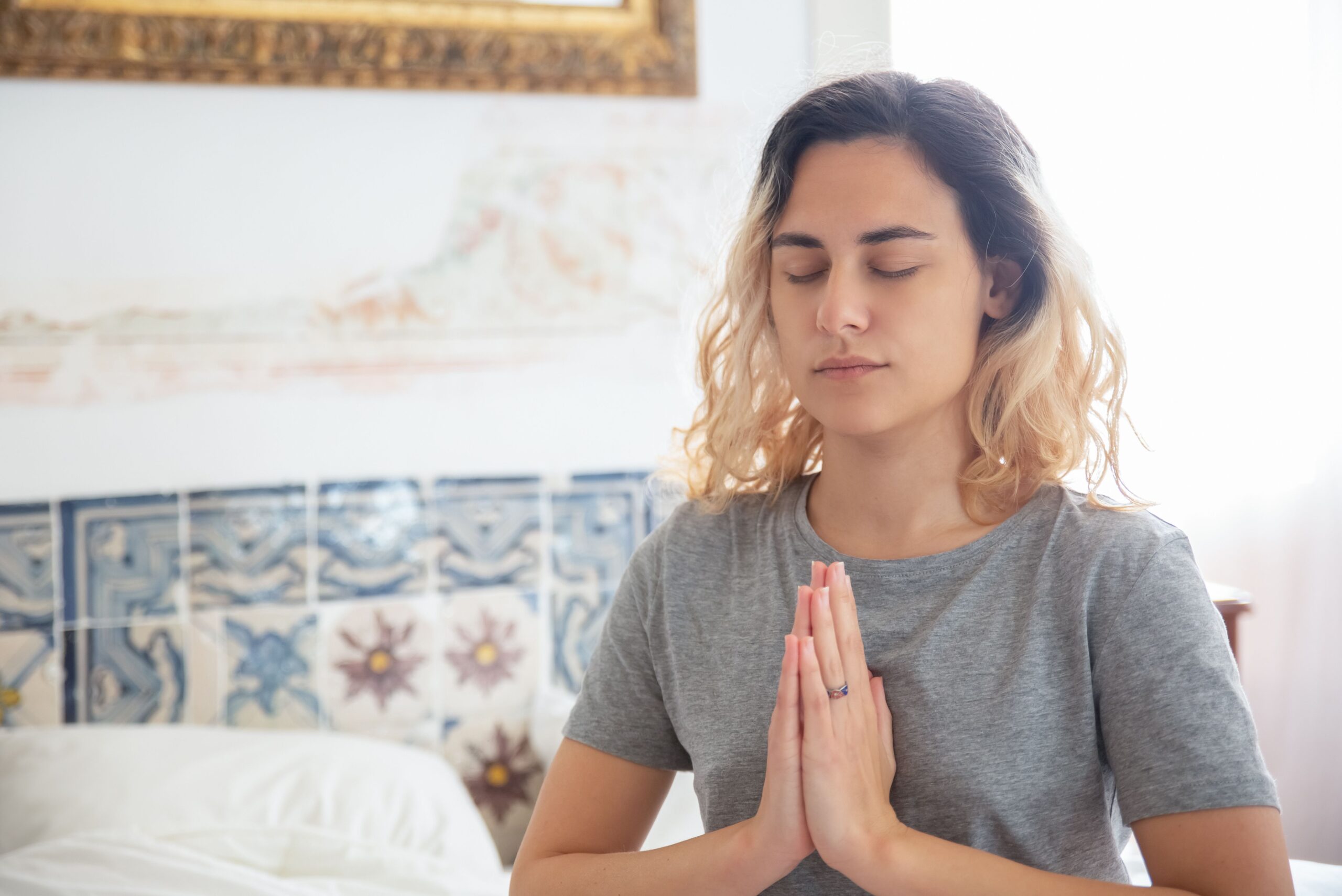
What Mindfulness Actually Is — and What It Is Not
Mindfulness is paying attention, on purpose, to what is happening right now, without immediately judging it or trying to fix it. It is a skill, and it improves with short, regular practice rather than one long, perfect session.
When anxiety is high, attention races ahead. It replays something that already happened, or rehearses something that might happen next. Mindfulness does not stop those thoughts. It changes your relationship to them: you notice the thought, notice the tight chest that comes with it, and choose where to put your attention next, instead of being carried along automatically.
Many beginners give up for the wrong reason. They sit down, their mind wanders within thirty seconds, and they conclude they are "bad at mindfulness". A wandering mind is not a failed practice. Noticing that it has wandered, and gently bringing it back, is the practice. Every return is a repetition, and repetitions build the skill.
Mindfulness is not a substitute for professional help. If anxiety is severe, persistent, or getting in the way of work, sleep, relationships or daily functioning, speak to your GP or another qualified professional. That is not a failure of practice. It is the right next step.
Why Body-Based Exercises Help
Anxiety is not only a thought. It is a whole-body experience: a racing heart, shallow breathing, tension in the shoulders, jaw or stomach, restlessness, and difficulty concentrating. Trying to argue yourself out of anxiety rarely works, because the thinking mind is the part that is spinning.
Mindfulness exercises give attention something concrete to rest on: the breath, your feet on the floor, sounds in the room, the weight of your hands. That anchor does not erase anxiety. It gives you a steadier place to stand while it passes, and interrupts the loop in which a worrying thought triggers a bodily reaction, which triggers another worrying thought.
Before You Start
You need no special equipment, app subscription, or silent room. Choose a regular time and anchor it to something you already do: after brushing your teeth, after lunch, or before opening your laptop. Choose a place where you will not be interrupted for a few minutes — a chair, a corner of a room, a park bench.
Start short. Five to ten minutes a day is a genuinely good beginning, and it beats an ambitious thirty minutes abandoned after three days. If five minutes feels too long, start with two. Consistency matters more than duration in the first month.
Exercise 1: Mindful Breathing
This is the foundation exercise, and the one to learn first. Your breath is always available, needs no equipment, and can be used discreetly anywhere, from a train seat to a meeting room.
Sit comfortably, close your eyes or rest your gaze softly on the floor, and notice your breathing as it is, without changing it at first. Is it shallow or deep, fast or slow? Where do you feel it most — nose, chest, or belly?
Now let the breath slow naturally. Breathe in gently through your nose, and out through your mouth or nose, whichever feels easier. Do not force a deep breath. If counting helps, count silently: in for four, out for six. A longer out-breath tends to feel settling, but if the counts strain you, shorten them. Comfort matters more than any particular number.
When your mind wanders, notice it without scolding yourself, label it "thinking" if that helps, and return to the next breath. Use a gentle timer for five minutes so you are not clock-watching. If you feel dizzy, stop, breathe normally, and try again another time with shorter counts.
Exercise 2: The Body Scan
Anxiety often lives in the body before you notice it in your thoughts: shoulders creeping towards your ears, a clenched jaw, a knotted stomach. The body scan trains you to notice that tension early, while it is still easy to release.
Lie down or sit comfortably. Take two or three easy breaths, then bring attention to your feet. Notice whatever is there: warmth, coolness, tingling, pressure, or nothing much at all. Noticing "nothing much" is still noticing.
Move slowly upwards — ankles, calves, knees, thighs, hips, stomach, chest, hands, arms, shoulders, neck, jaw, face — spending about thirty seconds on each area. Where you find tension, direct attention there on the in-breath and let it soften slightly on the out-breath. You are not forcing relaxation. You are giving tension permission to ease.
A full scan takes ten to twenty minutes, but a short version covering feet, stomach, hands, shoulders and face takes about five minutes and is perfectly useful, especially in the evening as a bridge between a busy day and sleep.
Exercise 3: 5-4-3-2-1 Grounding
Grounding is the exercise to reach for when anxiety feels sudden, or when thoughts spin too fast for quiet breathing to catch hold. It anchors attention in the senses, in the room you are actually in. Work through the senses, naming each item silently or aloud, and taking your time:

- 5 things you can see. Name them in detail: the blue mug on the desk, the crack in the ceiling, the tree outside the window.
- 4 things you can touch. Your feet on the floor, the fabric of your jumper, the cool surface of a table, your hands pressed together.
- 3 things you can hear. Traffic outside, the hum of a fridge, your own breathing. You need not like the sounds. Just notice them.
- 2 things you can smell. Coffee, soap on your skin, fresh air from a window. If nothing obvious is present, notice that absence.
- 1 thing you can taste. A sip of water, a mint, or simply the taste in your mouth right now.
If you finish and still feel unsettled, run through it again with different items. Our grounding guide covers this exercise in full, and it pairs well with the breathing techniques in our panic attacks guide, both linked at the end of this article.
Exercise 4: Mindful Walking
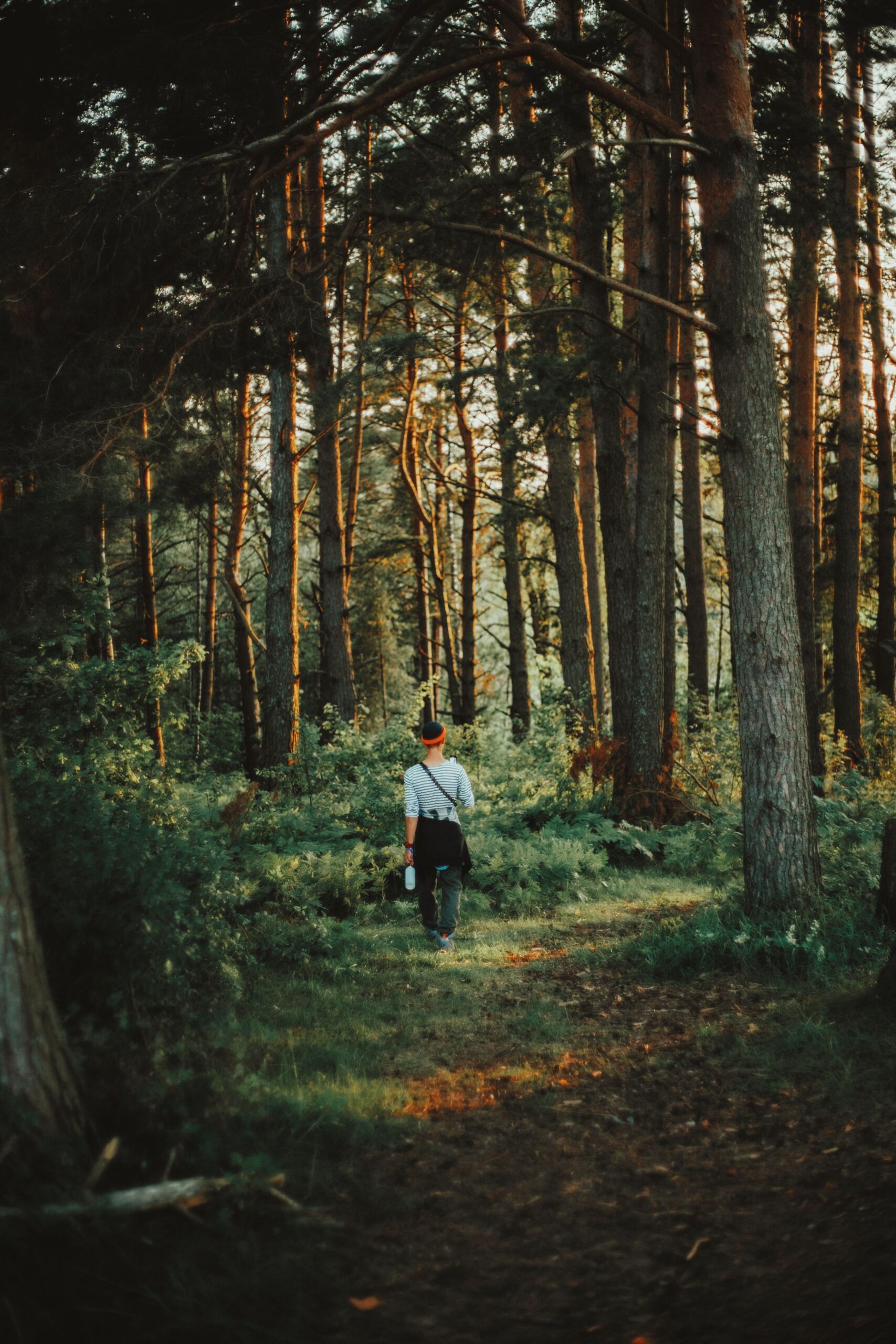
Not everyone calms down by sitting still. If sitting makes you more restless, mindful walking turns movement itself into the practice. Walk at a slower pace than usual. You need no countryside path; a garden, a quiet corridor, a park, or a few lengths of a room will do.
Bring attention to the sensations of walking: heel striking the ground, weight shifting, toe pushing off, air on your face. When your mind drifts to a worry, notice it and return to the next step. It can help to label silently — "lifting, moving, placing" — or to breathe in for three steps and out for three steps.
Mindful walking also needs no extra time: a ten-minute walk to the shops, taken mindfully, counts. So does the walk from the car park to the office, if you take it at a mindful pace instead of rehearsing the meeting ahead.
Exercise 5: Noticing and Labelling Thoughts
This exercise is for anxiety that arrives as a stream of "what if" thoughts. Instead of following each thought to its conclusion, you practise stepping back and observing it.
Sit quietly for a few minutes and let thoughts come. Each time you notice one, give it a short, neutral label: "worrying", "planning", "remembering", "judging". Then let it pass, like a bus going by, and return to your breath. You are not suppressing the thought or deciding whether it is true. You are practising not being pulled into it automatically.
If a thought is distressing, you need not stay with it. Label it, return to the breath or to a grounding exercise, and come back to this practice another day. Over time, labelling creates a small but valuable gap between a thought and a reaction — a gap in which you can choose what to do next.
Exercise 6: Mindfulness in Everyday Activities
Formal sitting practice is only half the story. The other half is bringing the same attention to ordinary activities. Pick one routine activity each day and do it with full attention.
Mindful eating is a good starting point. Eat one meal or snack without a screen or phone nearby. Notice the colour and smell of the food, the texture of the first bite, the flavours as they change, the feeling of fullness arriving. You will probably notice how often the urge to reach for a distraction arises. Noticing that urge, without automatically obeying it, is itself practice.
Building a Routine That Lasts
Most beginners fail not because mindfulness does not suit them, but because the routine was too ambitious or too vague. A realistic first fortnight: week one, five minutes of mindful breathing each morning, plus one grounding exercise whenever you notice tension. Week two, keep the morning breathing, add a five-minute body scan in the evening three times a week, and choose one daily activity to do mindfully.
Expect lapses. A missed day is not a ruined practice. The useful response to a lapse is the same as to a wandering mind: notice it without judgement, and begin again at the next opportunity.
Common Beginner Mistakes
Trying to empty the mind is the most common misunderstanding. Mindfulness is not about having no thoughts. It is about noticing thoughts without being swept away by them. If your mind is busy, you have plenty of material to practise with.
Forcing the breath is another. If a count makes you feel strained, dizzy or more anxious, shorten it, or drop the counting and follow the natural breath. NHS breathing guidance for stress takes a similar approach: breathe gently and regularly, without forcing depth, and build up gradually.
When to Get Extra Support
Mindfulness can be a useful part of looking after your mental health, but it has limits. Speak to your GP, or seek support through an NHS service, if anxiety persists over weeks, is getting worse, regularly disrupts sleep, work or relationships, or comes with panic attacks that keep recurring. Mention physical symptoms too, so other causes can be ruled out — new or unexplained physical symptoms always deserve a professional check.
If you ever feel you might act on thoughts of harming yourself, seek help urgently: contact your GP, an NHS urgent mental health service, or emergency services if you feel at immediate risk. You do not have to work through that kind of distress with breathing exercises alone.
A Simple Place to Start Today
Start small, start today, and start with the breath. Sit down, set a timer for five minutes, and follow your breathing, returning gently each time your mind wanders. Tomorrow, do it again. That repetition is the whole method, available without cost or equipment. Then add one grounding exercise and one everyday mindful activity. Within a few weeks you will have a small toolkit — breathing for steadiness, grounding for sudden spikes, body scan for wind-down, walking for restless days — and you will know from experience which tool fits which moment.
Frequently Asked Questions
How long does mindfulness take to help with anxiety?
There is no fixed timetable, and anyone promising one should be treated with caution. Many people notice small changes — catching a worrying spiral a little earlier, or recovering a little faster — within a few weeks of short daily practice. Larger changes tend to build gradually over months.
What if I cannot sit still or my mind will not stop?
Restlessness and a busy mind are normal at the start. Try mindful walking instead of sitting, shorten sessions to two or three minutes, or use a more active anchor such as 5-4-3-2-1 grounding. The aim is not stillness for its own sake. It is attention, and attention can be practised while moving just as well as while sitting.
Related reading
- 5-Minute Mindfulness Exercises for Anxiety
- Mindfulness Breathing Techniques for Panic Attacks
- Grounding Exercises for Anxiety: 5-4-3-2-1 Technique
- Body Scan Meditation Script (Free)
- Box Breathing for Anxiety: Step-by-Step
- Mindful Walking: Technique Guide


