What a Body Scan Is
A body scan is a meditation in which you move your attention slowly through the body, area by area, noticing whatever sensations are present — warmth, coolness, pressure, tingling, tightness, or nothing much at all — without trying to change them. It is one of the core practices in mindfulness-based programmes, and one of the most useful for anxiety, because anxiety so often lives in the body before you notice it in your thoughts: shoulders creeping towards your ears, a clenched jaw, a knotted stomach, shallow breathing.

The script below is written to be used in two ways. You can read it aloud slowly to yourself or to someone else, pausing where indicated. Or you can read it through once, learn the sequence, and then follow it silently from memory, using the headings as signposts. Either way works. The script is free to use for personal practice; no app, subscription, or equipment is needed.
Before you start, a note on attitude. A body scan is not a hunt for relaxation, and it is not a test you can pass or fail. Some areas will feel vivid, others blank. Some days your mind will wander constantly. Noticing "nothing much here" is still noticing, and noticing that your mind has wandered — then gently returning — is the practice itself, just as in breathing meditation.
How to Use This Script
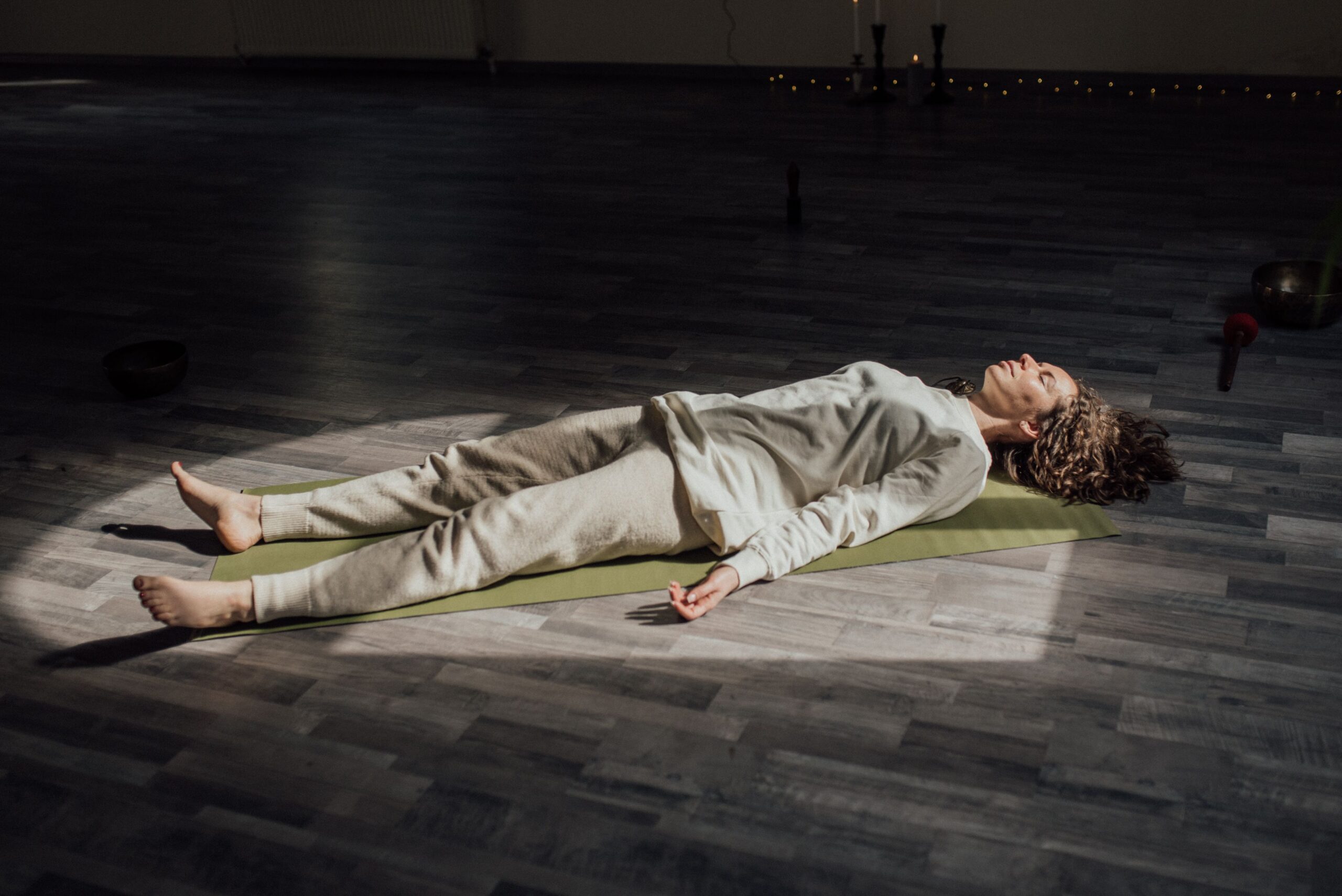
Lie down or sit comfortably. Lying down makes it easier to feel the weight of the body, but if lying down makes you drowsy, sit in a chair with your feet on the floor and your hands resting in your lap. Loosen anything tight around your waist. Close your eyes if you wish, or rest your gaze softly on the ceiling or floor.
Set a gentle timer if you are using a timed version, so you are not clock-watching. If you are reading the script aloud, read slowly — roughly half your normal speaking pace — and pause for a few breaths at each area before moving on. The timings in the headings are a guide, not a rule. If one area needs longer, stay there longer.
If you feel dizzy, unwell, or more distressed at any point, stop, open your eyes, breathe normally, and try again another time. If practice regularly leaves you feeling worse, pause and speak to a professional rather than pushing through.
The Script: A Full Body Scan (About 20 Minutes)
Arriving (2 Minutes)
Settle into your position. Let your body be supported by whatever is underneath it — the bed, the floor, the chair. You do not need to hold yourself up. Let your arms rest, your legs rest, your head rest.
Take two or three easy breaths. Do not force a deep breath. Just breathe in gently, and out slowly, and notice the breath as it is.
Now let attention widen to your whole body, lying or sitting here. Notice the points of contact: your heels or feet against the surface beneath you, the backs of your legs, your back, your shoulders, the back of your head. Notice the weight of your body, pressing down, and the surface pressing back up to meet it. When you are ready, we begin at the feet.
Feet, Legs, and Hips (5 Minutes)
Bring attention to your feet. Notice your toes, the soles of your feet, the pressure where they rest against the surface beneath you. Is there warmth, coolness, tingling, or not much sensation at all? Whatever is there, notice it. Whatever is not there, notice that too.
Move to your ankles, then up into your calves. Notice the muscles at the backs of your lower legs: tight, soft, heavy, restless? Do not try to change them. Just notice. Move to your shins, then your knees — the kneecaps, the backs of the knees, the feeling of the knees bending or resting straight.
Now your thighs — the fronts, the backs, the weight of them resting — and then your hips and pelvis. Notice the feeling of your hips resting against the surface beneath you, any tightness around your hip joints. If you notice tension, direct attention to it on the in-breath, and let it soften very slightly on the out-breath. You are not forcing relaxation. You are giving tension permission to ease, if it wishes to.
If your mind wanders — to a task, a worry, a plan — notice that it has wandered, without scolding yourself, and bring attention gently back. That return is the practice.
Stomach, Chest, and Back (4 Minutes)
Bring attention to your stomach. Notice it rising and falling with the breath. Is it tight, soft, fluttering, full, empty? Anxiety often gathers here, and noticing it early — before it becomes a churning worry — is one of the most useful things a body scan teaches.
Now notice your lower back, where it meets the surface beneath you. Is there a gap, or does it rest fully? Notice any ache or stiffness without trying to fix it. Move to your chest: rising and falling, your heartbeat if you can feel it — not to count it, just to notice it. Then your upper back, between the shoulder blades, where many people hold the day's tension without realising it. On each out-breath, let the muscles here drop a fraction, if they will. If they will not, that is fine too. Notice, and move on.
Hands, Arms, Shoulders, and Neck (4 Minutes)
Bring attention to your hands. Notice your fingers — curled, resting open, clenched without you realising? Notice your palms: warm, cool, dry, damp. Move slowly up your forearms, to your elbows, then your upper arms. Notice the weight of your arms resting, the feeling of your sleeves against your skin.
Now your shoulders. Notice whether they are raised towards your ears — a very common anxiety posture — or resting down. On each out-breath, let them drop a fraction. You may need to do this several times; shoulders rarely drop fully on the first attempt. Move to your neck, front and back, noticing any stiffness from holding your head up all day, then your throat, and the feeling of swallowing, or the space in your throat as you breathe. Keep the breath gentle. Do not force depth.
Jaw, Face, and Head (3 Minutes)
Bring attention to your jaw. Is it clenched? Let your teeth part very slightly, and notice the small muscles around your jaw soften. This one change often releases more tension than people expect.
Notice your mouth, your lips, your cheeks, your nose, and the feeling of air moving in and out of your nostrils. Notice your eyes, behind closed lids, and the muscles around them. Let your forehead smooth, as if the skin there were becoming a little wider, a little softer. Finally, notice the top and back of your head, your scalp, your hair against the surface beneath you, the whole head resting.
Whole Body and Closing (2 Minutes)
Now widen attention to your whole body, all at once. Feet to head, lying or sitting here, breathing. Notice the body as a single field of sensation — some areas vivid, some quiet, some blank. That unevenness is normal. It is how bodies actually feel.
Take two or three easy breaths, noticing the whole body rising and falling. When you are ready, begin to move gently: wiggle your fingers and toes, stretch your arms if you wish, roll your shoulders. Open your eyes. Sit up slowly, and take a moment before standing or reaching for your phone. Notice how you feel — calmer, much the same, or perhaps sleepy. Any of those is a fine outcome. You have practised.
A 10-Minute Version
If twenty minutes feels too long, use this condensed sequence, spending about a minute on each area:
1. Arrive. Settle, two easy breaths, notice points of contact. 2. Feet and legs. Feet, ankles, calves, knees, thighs — moving up steadily. 3. Stomach and chest. Rising and falling, tightness or ease, heartbeat if you notice it. 4. Hands and arms. Fingers, palms, forearms, upper arms. 5. Shoulders and neck. Let shoulders drop a fraction on each out-breath. 6. Jaw and face. Unclench the jaw, soften the forehead, notice the eyes. 7. Whole body. Widen attention, two easy breaths, open your eyes, stretch.
This version is a good daily practice, and a useful evening wind-down. It covers the areas where tension most commonly gathers, without demanding a long block of time.
A 5-Minute Version
For a busy day, or as a bridge between work and rest, use this shortest version, spending about a minute on each area:
1. Feet. Pressure, warmth, tingling, or nothing much. 2. Stomach. Rising and falling, tight or soft. 3. Hands. Clenched or open, warm or cool. 4. Shoulders. Drop a fraction on each out-breath. 5. Face. Jaw unclenched, forehead soft, whole body, one easy breath, open your eyes.
Five minutes will not dissolve a difficult day, but it can interrupt a spiral, release tension you had not noticed, and give you steadier footing for whatever comes next. It pairs well with the five-minute exercises in our companion guide, and with grounding — covered in our grounding guide — if your mind is too busy for a body-focused practice on a given day.
Tips for a Better Body Scan
Go slowly. The most common mistake is rushing. A body scan done slowly, with real attention to each area, teaches more than a fast one that merely names body parts. If you finish in five minutes when you meant to take twenty, you were listing, not scanning.
When to Get Extra Support
A body scan is a useful self-help practice, but it is not a treatment for an anxiety disorder, and it is not a substitute for professional support. Speak to your GP, or seek support through an NHS service in your nation of the UK, if anxiety is persistent, worsening, or regularly interfering with sleep, work, or relationships; if you experience recurring panic attacks; or if you notice new, unexplained, or persistent physical symptoms, which always deserve a professional check so other causes can be ruled out.
Seek urgent help if you feel you might act on thoughts of harming yourself. You do not have to work through that kind of distress with meditation alone.
FAQ
Do I need to lie down for a body scan?
No. Lying down makes it easier to feel the body's weight, but sitting in a chair works well, especially if lying down makes you sleepy. What matters is a position you can hold comfortably for the length of the scan, without needing to adjust constantly.
What if I fall asleep during a body scan?
That is common, especially in the evening or when lying down. It usually means you were tired, not that you failed. If you want to stay awake, practise sitting upright, earlier in the day, or with your eyes open and resting on a fixed point.
What if I feel nothing in some parts of my body?
That is normal, and it is still a valid observation. "Nothing much here" is a sensation report, not a failure. Some areas are naturally less vivid than others, and vividness changes from day to day. Do not force sensation by tensing or moving the area.
Related reading
- Mindfulness Exercises for Anxiety: Complete UK Beginner Guide
- 5-Minute Mindfulness Exercises for Anxiety
- Mindfulness Breathing Techniques for Panic Attacks
- Grounding Exercises for Anxiety: 5-4-3-2-1 Technique
- Box Breathing for Anxiety: Step-by-Step
- Mindful Walking: Technique Guide