Anxiety is not just a thought pattern.
It is a physiological state. A full body event that involves the breath, the muscles, the digestive system, the heart rate, and the nervous system simultaneously.
This is why thinking your way out of anxiety rarely works. The mind is downstream of the body. And the body needs a different signal before the mind can genuinely change.
This is precisely what yoga addresses. Not as a relaxation technique. Not as exercise. But as a systematic practice for changing the physiological conditions that make anxiety possible in the first place.
Here is the habit that makes the difference.
The Anxiety Loop Nobody Talks About
Most people experience anxiety as a mental event. Worrying thoughts. Worst case scenarios. A mind that will not stop.
But here is what science now confirms: the thought is not the beginning of the loop. The breath is.
When the body enters a state of low-grade threat, the breath becomes shallow and chest-led. Short inhales. Truncated exhales. This breathing pattern directly signals the sympathetic nervous system to stay activated, which keeps cortisol elevated, which keeps the mind generating threat-related thoughts, which keeps the breath shallow.
The loop is self-reinforcing. And it runs automatically, below conscious awareness, for hours at a time in most people experiencing chronic anxiety.
The entry point is the breath. And yoga, specifically Hatha yoga [https://www.adhiroha.com/hatha-teacher-training-course-rishikesh], has been working with this entry point for over a thousand years.
What Hatha Yoga Actually Does to the Anxious Body
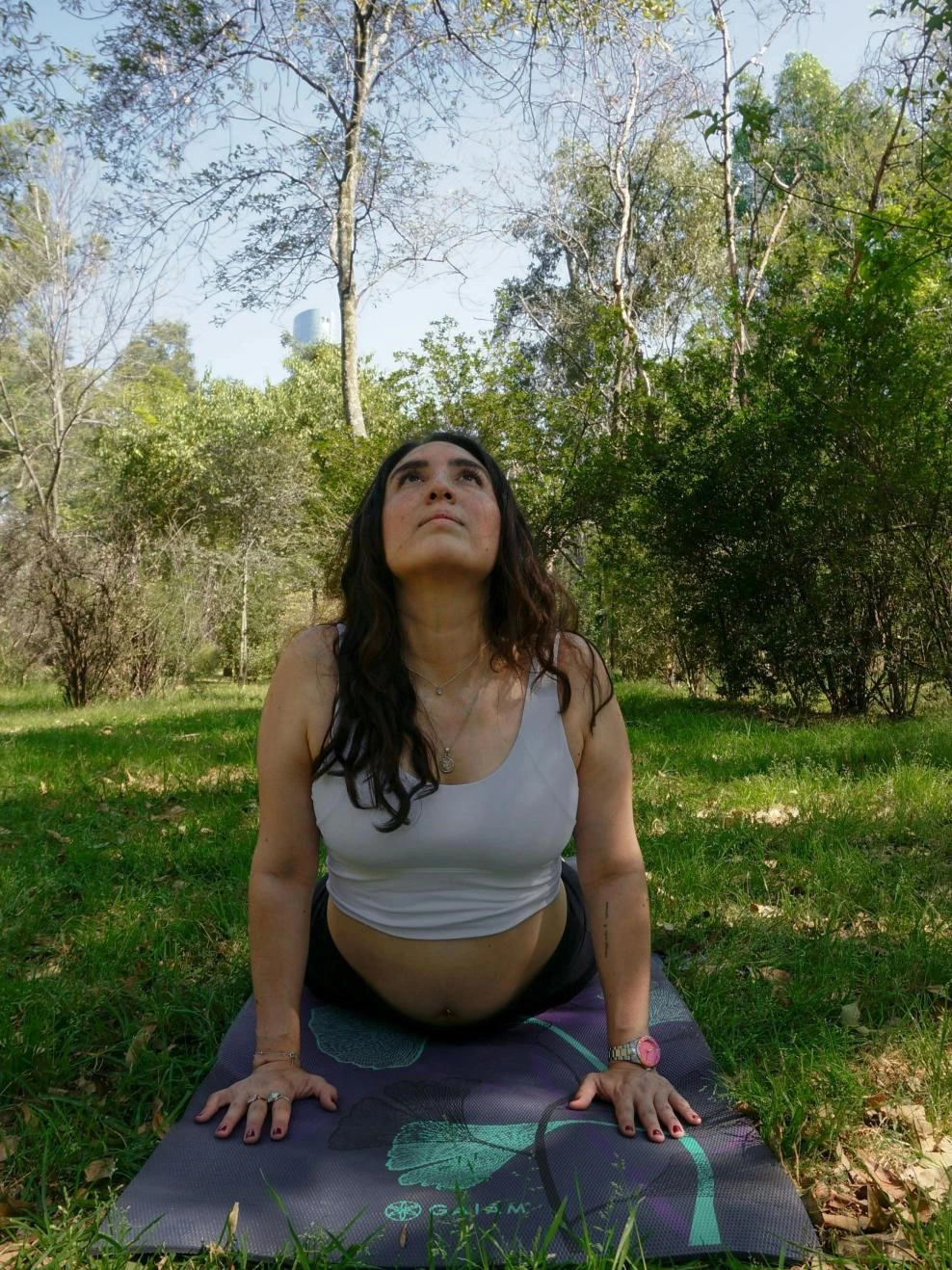
[Image: hatha-yoga-pose.jpg | Alt text: Slow mindful Hatha yoga pose in natural light for nervous system balance and anxiety relief]
Hatha yoga is often misunderstood as a gentle, beginner style of physical yoga. It is actually something far more specific and far more powerful.
The word Hatha comes from Ha, meaning sun, and Tha, meaning moon. It refers to the balance of opposing forces, specifically the balance between the sympathetic and parasympathetic nervous systems.
Classical Hatha yoga was designed as a complete system for preparing the body and mind for meditation, by systematically releasing the physical and energetic blockages that keep the nervous system in a state of chronic activation.
The Hatha Yoga Pradipika, composed in the 15th century, describes asana not as exercise but as a tool for creating steadiness and ease in the body simultaneously. Sthira Sukham Asanam, Patanjali Yoga Sutras 2.46. That specific combination, effort without strain, stability without rigidity, is the physiological opposite of anxiety.
When the body learns to hold that quality consistently, the nervous system begins to recalibrate. The baseline shifts. The anxiety loop has less to feed on.
The Specific Habit
The habit is simple. It is not easy. But it is simple.
Every day, without exception, practice ten minutes of slow, breath-led Hatha yoga followed by five minutes of extended exhale breathing.
The sequence does not matter as much as the quality. Each movement follows the breath, not the other way around. Each inhale creates length. Each exhale creates release. Nothing is forced. Nothing is performed.
This is the opposite of how most people approach yoga when anxious. The anxious practitioner tends to push harder, move faster, and use physical effort to outrun the mental noise. That approach feeds the sympathetic nervous system rather than calming it.
The habit described here does the opposite. It uses slowness, breath, and deliberate ease as direct interventions on the physiological state that anxiety requires to sustain itself.
What the Research Confirms
A 2018 study published in Frontiers in Psychiatry found that yoga-based interventions significantly reduced anxiety symptoms across multiple populations, with breath-focused practices showing the strongest and most consistent effects [https://www.frontiersin.org/articles/10.3389/fpsyt.2018.00067/full].
A separate 2019 review in the Journal of Psychiatric Research confirmed that mind-body practices combining movement and breathwork produced measurable reductions in both state and trait anxiety, with effects comparable to conventional anxiety treatments in mild to moderate cases [https://www.sciencedirect.com/science/article/abs/pii/S0022395618309962].
The research is not saying yoga is a replacement for professional support. It is saying that the body has a direct physiological pathway out of the anxiety state, and that consistent yoga practice trains that pathway until it becomes accessible on demand.
Why Consistency Matters More Than Duration
Ten minutes every day produces different results from sixty minutes once a week.
The nervous system changes through repetition, not intensity. Each consistent practice session sends the same signal to the same neural pathways, gradually strengthening the parasympathetic response until it becomes the default rather than the exception.
This is why the habit framing matters. Not a yoga class. Not an occasional practice. A daily non-negotiable ten minute commitment that the nervous system can begin to anticipate and prepare for.
Within two weeks most practitioners notice a shift in their baseline, a slightly lower resting level of tension, a slightly faster recovery from stress, a slightly quieter mental background noise.
Within a month the shift becomes unmistakable.
Taking It Deeper
The ten minute daily habit is the beginning, not the destination.
For those who want to understand the complete system behind these practices, how asana, breathwork, meditation, and yogic philosophy interact as a unified science of the mind, a 500 hour yoga teacher training course in India [https://www.adhiroha.com/500-hour-yoga-teacher-training-course-rishikesh] offers exactly this depth. It is where the daily habit becomes a complete understanding of why the practice works and how to apply it across every dimension of life.
Anxiety is not a character flaw. It is a nervous system pattern. And nervous system patterns change with the right consistent input.
Ten minutes. Every day. That is the input.
Author Bio: Siddhartha Goyal is a wellness writer and yoga researcher working with Adhiroha Yoga Centre in Rishikesh, India, a traditional yoga centre in the foothills of the Himalayas. He writes on yoga philosophy, breathwork, and the science of nervous system regulation. His work bridges classical Indian wellness traditions and modern mental health research. adhiroha.com

