First, What a Panic Attack Feels Like — and What to Do First
A panic attack can feel alarming in a way that is hard to describe to someone who has not had one: a racing or pounding heart, shortness of breath or a feeling of not getting enough air, chest tightness, shaking, sweating, dizziness, nausea, tingling hands, or a sense of unreality, as if the world has gone distant or strange. It can arrive suddenly, peak within minutes, and leave you exhausted and shaky afterwards.
One essential safety note comes before any breathing technique. If you experience chest pain, severe breathlessness, or other worrying physical symptoms for the first time, or you are unsure what is happening, seek urgent medical attention rather than assuming it is panic. Call 999 in the UK if you need emergency help. Breathing techniques are for moments when you know, or a professional has previously confirmed, that you are experiencing panic. They are not a substitute for checking a new or severe physical symptom.
Once you have ruled out an emergency, the aim is not to fight the panic or force yourself calm in thirty seconds. It is smaller and more achievable: stay with the experience, breathe a little more slowly, and ride it out until it passes, as it will. These techniques work best if you have practised them when calm, so they are familiar when panic arrives.
Why Breathing Changes During Panic — and Why Forcing It Backfires
During panic, breathing typically becomes fast and shallow, using the upper chest rather than the belly. That rapid breathing can itself intensify the sensations that frighten you: dizziness, tingling, breathlessness, and a racing heart. It is a loop — anxiety speeds the breath, the sped-up breath produces alarming sensations, and those sensations feed the anxiety.
The way out is not huge, forceful deep breaths. That common mistake can make light-headedness worse. The effective approach is almost the opposite: smaller, gentler breaths, with particular attention to a slow, unhurried out-breath. You are not trying to fill your lungs to capacity. You are slowing the rhythm, breath by breath, until your body gets the signal that the alarm can stand down.
Mindfulness adds an attitude to the mechanics: noticing what is happening without demanding that it stop immediately. You breathe, you notice the panic is still there, you breathe again.
Technique 1: The Extended Exhale
This is the technique to learn first, and the one to reach for during an attack, because it is simple, needs no counting pattern to remember under stress, and directly addresses the fast-breathing loop.
Sit down if you can, or stand still with your feet planted. Place one hand on your belly if that helps you feel the breath, or rest your hands in your lap. Breathe in gently through your nose, without forcing depth. Then breathe out slowly through your mouth, as if cooling a hot drink or making a candle flame flicker without blowing it out.
Make the out-breath noticeably longer than the in-breath — roughly twice as long, if that feels comfortable. You might breathe in for three and out for six, or in for four and out for six. The exact numbers matter less than the ratio: out longer than in, and both unforced. Repeat for several minutes, or as long as the attack lasts.
If counting feels stressful, drop the numbers and focus on making each out-breath slow and steady. If you feel dizzy, stop forcing any pattern and breathe normally for a while.
Technique 2: Box Breathing
Box breathing, also called square breathing, gives attention a clear structure to follow, which some people find easier than an open-ended rhythm when their mind is racing. It is widely used in anxiety self-help material, including NHS guidance, and can be done silently anywhere.
Imagine a square with four equal sides, each side one phase of the breath, each phase the same count — usually four seconds. Breathe in through your nose for four. Hold gently for four — a soft pause, not a tense, clenched hold. Breathe out slowly through your mouth for four. Hold again, with empty lungs, for four. Then begin the next round.
Repeat for four or five rounds. If four feels too long, use three, or even two. The square shape matters more than the number: equal phases, steady rhythm, no rushing.
Technique 3: Belly Breathing
Many people breathe from the upper chest when anxious, shoulders rising on each in-breath. Belly breathing retrains the breath to come from lower down, using the diaphragm, which tends to produce a slower, fuller rhythm.
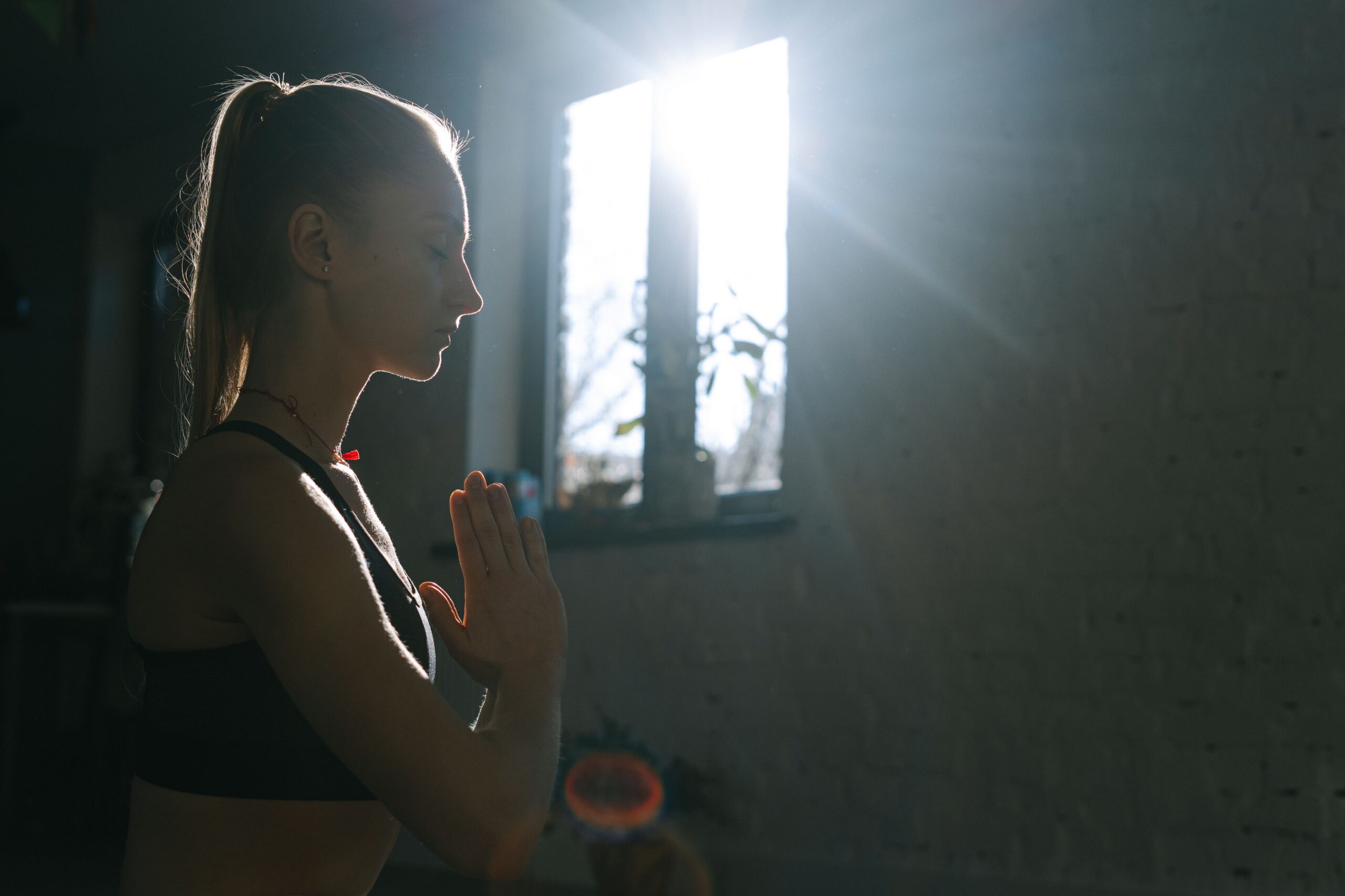
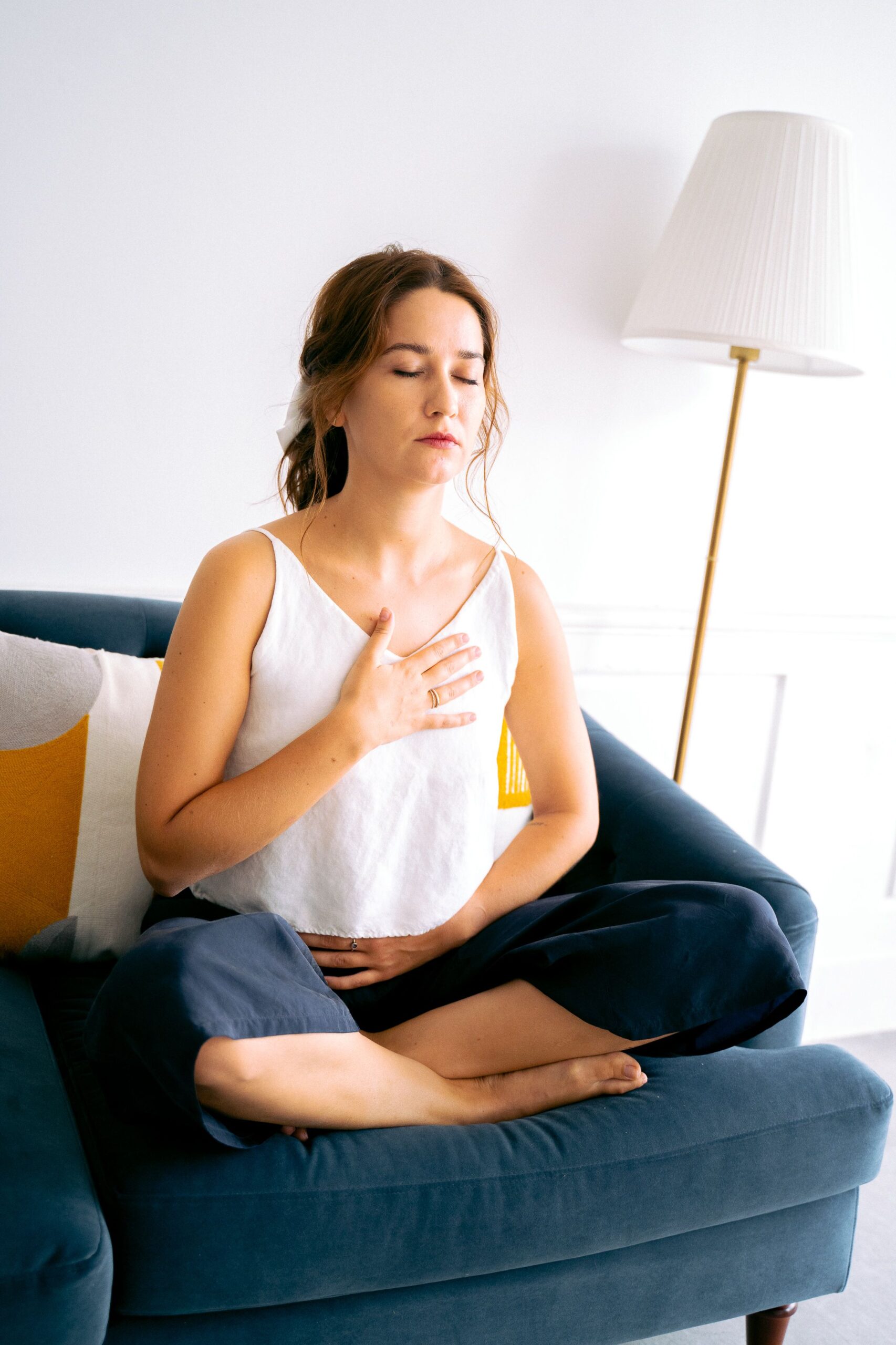
Sit comfortably, or lie down if you are at home and it is safe to do so. Place one hand on your chest and one on your belly. Breathe in gently through your nose and notice which hand moves. In belly breathing, the belly hand should rise, while the chest hand stays relatively still. Breathe out slowly through your mouth, feeling the belly fall.
Do not push the belly out forcefully or take an exaggerated breath. Think of letting the breath drop lower in the body, rather than pulling it in harder. Practise for five minutes a day when calm, lying down at first if that makes the movement easier to feel.
During panic, you may not manage full belly breathing, and that is normal. Even a partial shift to a slightly lower, slower breath is useful.
Technique 4: Pursed-Lip and Mindful Breathing
Pursed-lip breathing slows the out-breath and can help if you feel breathless during panic, because it prevents you from emptying your lungs too quickly. Breathe in gently through your nose for about two. Then purse your lips, as if about to whistle or blow through a straw, and breathe out slowly through them for about four. The slight resistance naturally slows the exhale and gives you something physical to focus on. It combines well with the extended exhale — simply use pursed lips for the long out-breath.
Mindful breathing is different: you observe the breath without trying to change it. Sit still and bring attention to the breath exactly as it is — fast, shallow, uneven, or whatever it happens to be. When a frightening thought arises — "something is wrong with me", "I can't breathe", "this won't stop" — notice it as a thought, label it "worrying" if that helps, and return attention to the breath.
A Sequence for an Attack: Breathing Plus Grounding
Breathing alone is sometimes not enough to hold attention during panic, because the mind keeps being pulled back to frightening thoughts. Pairing breathing with grounding gives attention two anchors, and the combination is often more effective than either alone. Each step below is short, so it is memorable under stress.
Step 1: Stop and sit if you safely can. If you are driving, pull over safely first. If you are in a crowded place, move to a quieter spot if you can, but do not worry about a perfect location. Safety comes first; technique comes second.
Step 2: Name it. Say to yourself: "This is a panic attack. It feels awful, and it will pass." Naming the experience reduces its power to masquerade as something else, and reminding yourself that it is time-limited gives you something true to hold onto.
Step 3: Extended exhale for one minute. Breathe in gently, out slowly, out-breath longer than in-breath. Do not count rigidly. Just slow down.
Step 4: Ground with your senses. Name five things you can see, four you can touch, three you can hear, two you can smell, and one you can taste. Take your time and describe each item in detail. This is the 5-4-3-2-1 technique, covered in full in our grounding guide.
Step 5: Box breathing for a few rounds. In for four, hold for four, out for four, hold for four — or shorter counts if four feels too long.
Step 6: Check in and repeat. Is your breathing a little slower? Are your shoulders a little lower? If panic is still strong, repeat steps 3 to 5. There is no limit on repetitions. The attack will peak and pass on its own timetable; your job is to stay with it, breathing, until it does.
Afterwards, give yourself time to recover: feeling shaky, tired, or drained is normal. Drink some water and sit for a few minutes before a demanding task.
What Not to Do During a Panic Attack
Do not force huge deep breaths or breathe rapidly to "get enough air". Rapid, forceful breathing is part of the problem during panic, not the solution. Slow and gentle is the direction to move in, even if it feels counterintuitive when you feel breathless.
Do not immediately flee every situation in which panic occurs, if it is safe to stay. Leaving brings instant relief, which can make the next visit harder. Safety always comes first, though: if you need to leave, leave, without judging yourself for it.
Do not try to suppress or argue with every frightening thought mid-attack. Labelling a thought and returning to the breath is more effective than debating it while your alarm system is at full volume. Do not blame yourself for having panic attacks, or for not calming down faster.
Practising Between Attacks: A Two-Week Plan
In week one, practise the extended exhale for five minutes each morning: breathe in gently, breathe out slowly, and return to the breath each time your mind wanders. In the evening, add one minute of belly breathing, hand on belly, simply to learn what the movement feels like.
In week two, keep the morning extended exhale, add box breathing for a few rounds, and on two or three days practise the full sequence while imagining a mildly stressful situation, such as a busy train.
When to Seek Professional Help
Breathing techniques and mindfulness are useful self-help tools, but they are not a treatment for panic disorder, nor a substitute for professional assessment. Seek help if panic attacks keep recurring, if you start avoiding places or activities because you fear another attack, if anxiety is persistent or worsening, or if panic interferes with work, relationships, sleep or daily life.
Speak to your GP as a first step, or seek support through an NHS service in your nation of the UK. A professional can rule out other causes and discuss treatment options alongside self-help practice.
Seek urgent help if you feel you might act on thoughts of harming yourself, or if you experience new, severe or unexplained physical symptoms. Do not try to breathe your way through a medical emergency or a crisis on your own.
Frequently Asked Questions
What is the best breathing technique for a panic attack?
There is no single best technique, but the extended exhale — a gentle in-breath and a slow out-breath roughly twice as long — is the most widely recommended starting point, because it is simple to remember under stress and directly slows a rapid rhythm. Box breathing is a good alternative if you prefer a clear structure. Try both when calm, and use whichever feels more natural during an attack.
Should I breathe into a paper bag during a panic attack?
No. Breathing into a paper bag is old advice that is no longer recommended, because it can reduce oxygen levels and can be dangerous, particularly if breathlessness has another cause. Slow, gentle breathing in fresh air, with a long out-breath, is the safer approach. If you are unsure what is causing breathlessness, seek medical attention rather than trying home remedies.
Is it safe to practise breathing techniques on my own?
The gentle techniques here are widely used in self-help material. Stop if you feel dizzy, unwell, or more distressed, and breathe normally. If you have a respiratory or cardiac condition, check with a professional before starting a new breathing practice.
Related reading
- Mindfulness Exercises for Anxiety: Complete UK Beginner Guide
- 5-Minute Mindfulness Exercises for Anxiety
- Grounding Exercises for Anxiety: 5-4-3-2-1 Technique
- Box Breathing for Anxiety: Step-by-Step
- Body Scan Meditation Script (Free)